Goalball: Raising Curtain Up in Nepal
How NBSA transformed blind sports across Nepal by introducing Goalball—unlocking athletic choice, national tournaments, and empowering over 70 visually impaired youth and female athletes.
The Freedom to Choose in Sports: Beyond Cricket or Radio
Persons with disabilities live with diverse interests, passions, and physical aspirations. A single sporting opportunity cannot fulfill the full human potential of every individual. Options and freedom of choice are vital in reaching and uplifting maximum populations. Sport is the supreme domain where the fundamental human right of choice applies.
Prior to 2016 in Nepal, blind youth faced an unjust limitation: either play blind cricket or listen to the radio at home. There was simply no second choice for youths who desired fast-paced indoor team competition. Considering this critical void, the National Blind Sports Association (NBSA), in close collaboration with Danish Parasports and NDSNN, introduced Goalball to Nepal during the second phase of the DSOD project in mid-2016.
Under the technical guidance of international Danish coach Mr. Michael, an intensive 3-day coaching clinic in Kathmandu produced 15 pioneer domestic coaches, referees, and competitive players. That historic clinic proved to be a catalyst that sparked a nationwide sporting movement.
“With the arrival of goalball, a new ray of hope sprouted amongst youths with blindness. For the first time, athletes had the freedom to choose their sporting path. Since that day, goalball has become the passion and goal of many youths and children with visual impairments.”
National Blind Sports Association (NBSA), Nepal From Kathmandu Valley to Nationwide Para-Sport Circuits
Why Goalball Transformed Nepal
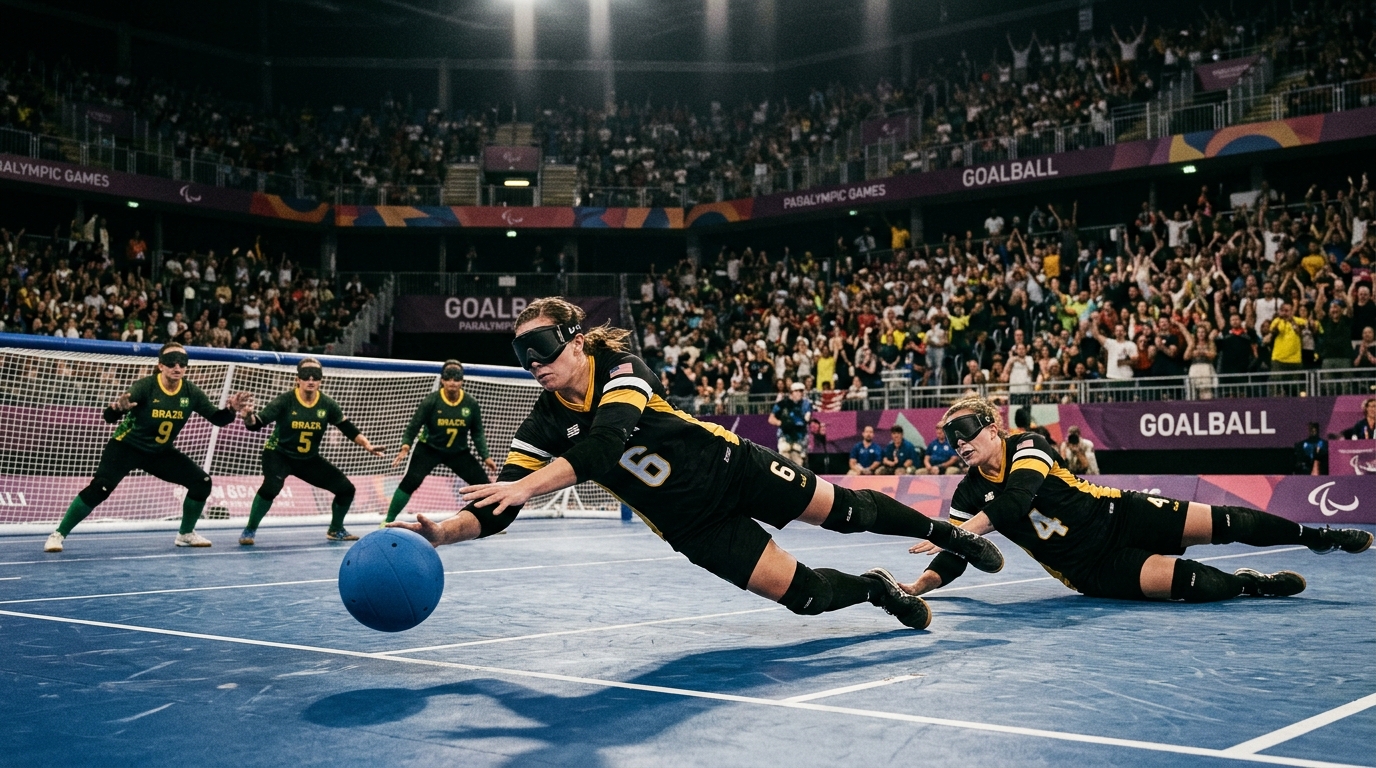
- True Acoustic Sport: Invented specifically for visually impaired athletes, not an adapted version of a sighted game.
- Zero Vision Bias: Certified blackout eyeshades equalize completely blind (B1) and partially sighted (B2, B3) players.
- Spatial & Reflex Mastery: Builds rapid 360-degree spatial hearing, agility, and defensive diving technique.
Official National Para-Sports Recognition
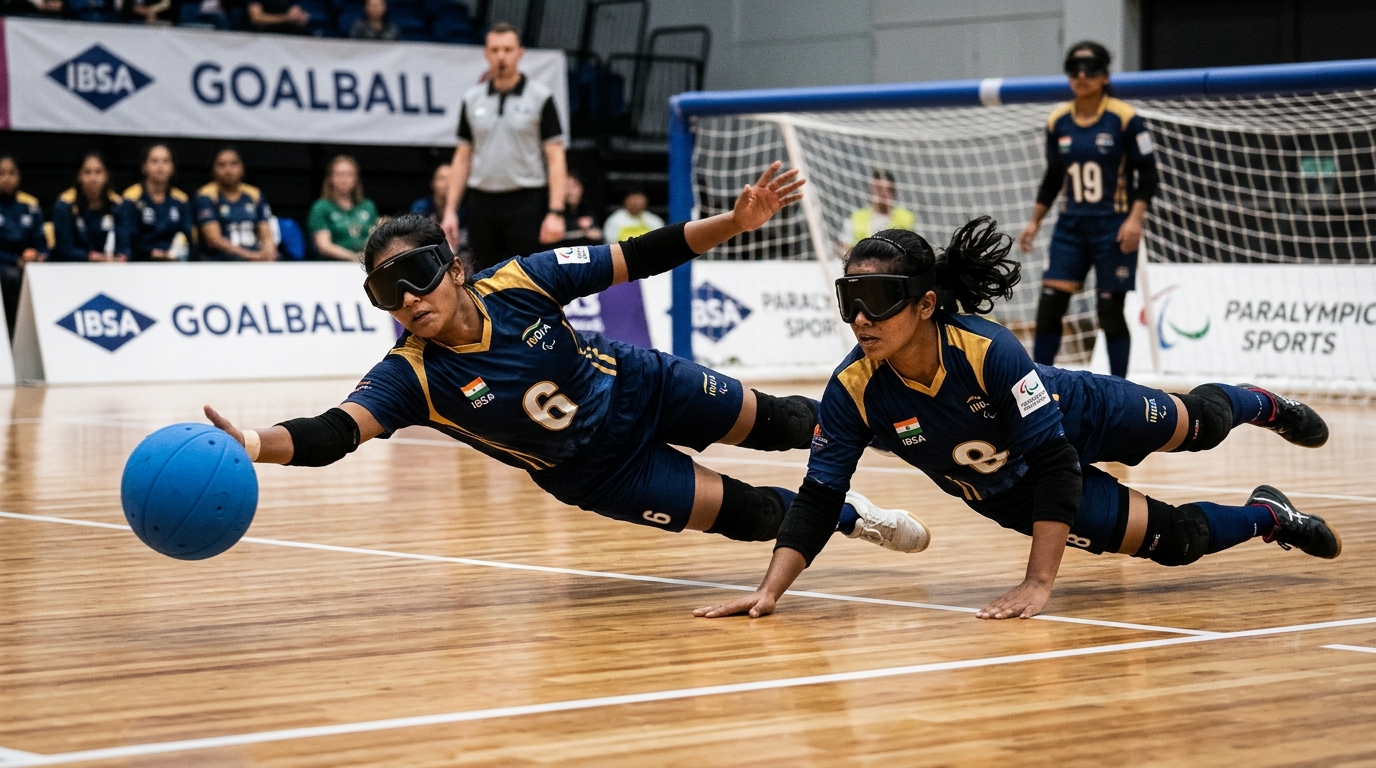
Within just two years of its introduction, Goalball earned official national tournament inclusion in the 1st National Para-Sports Competition organized under the National Sports Council in 2018.
Empowering Blind Girls & Expanding Beyond Kathmandu Valley
Since inclusion is NBSA’s non-negotiable core value, the organization has consistently prioritized blind girls and young women in coaching clinics, equipment allocation, and national competitions. Blind women in Nepal often face dual discrimination due to both gender and disability. Goalball broke down these historical barriers.
On the goalball court, blind female athletes discover their athletic strength, tactical intellect, and collaborative leadership. The acoustic game cultivates fearless physical confidence, independence in public transit, and a profound sense of sisterhood and achievement.
To ensure that sporting opportunities were not confined solely to the Kathmandu capital, NBSA proactively expanded Goalball into provincial hubs across Western and Far-Western Nepal—specifically establishing active training centers in Kaski (Pokhara) and Kanchanpur. Today, over 70 visually impaired youths, including dozens of female athletes, are regularly active.
Tactical Anatomy: How the Acoustic Game is Played
Goalball is played 3-on-3 on an indoor court measuring 18 meters long by 9 meters wide. Every dimension of the game is engineered for sensory equality and acoustic orientation.
1.25 KG Bell-Ball
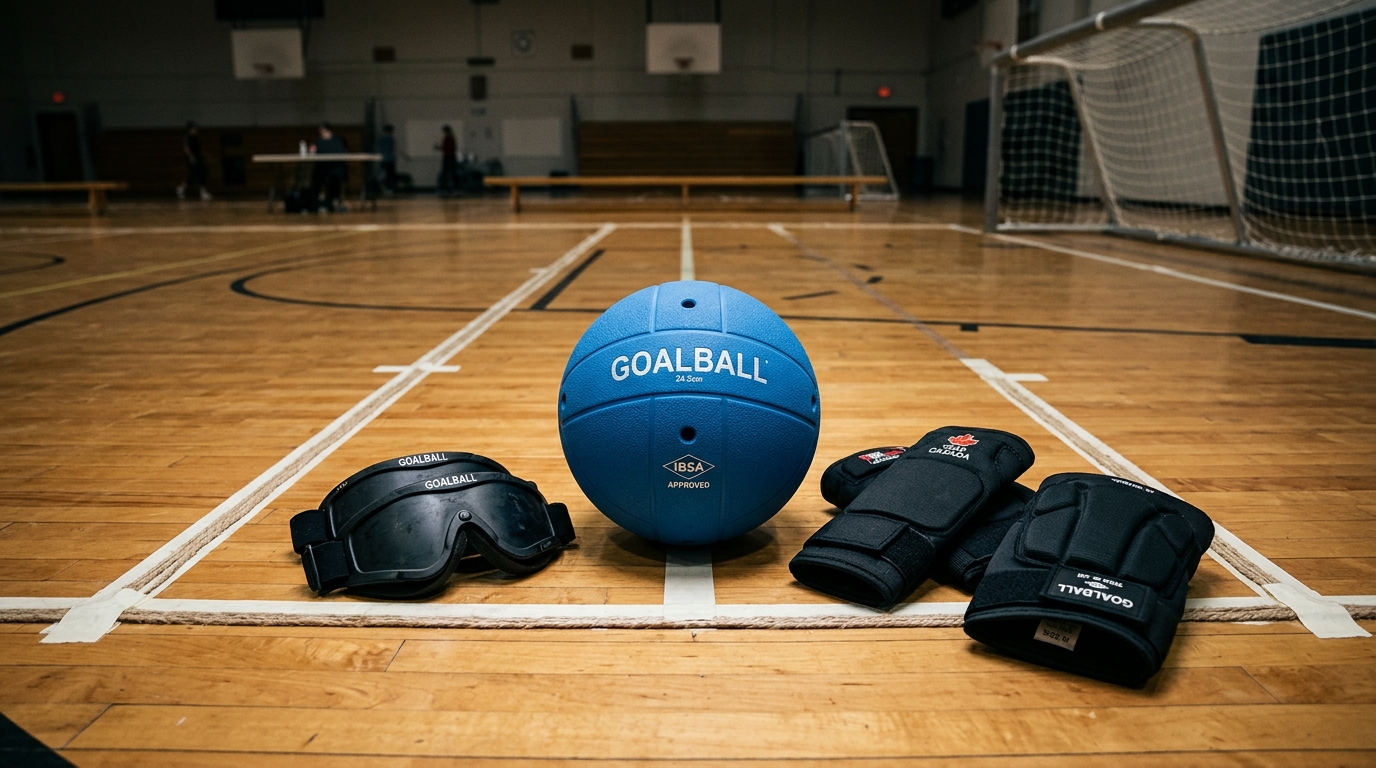
Crafted from heavy, durable rubber with 8 sound-release ports and two internal metal bells. Players track the speed, bounce, and spin purely through acute directional hearing.
Certified Blackout Eyeshades
All 6 players wear certified light-proof goggles with eye patches beneath them. This equalizes total blindness (B1) and partial vision (B2, B3) for 100% fair competition.
Tactile Twine Court Lines
Heavy string is taped beneath floor boundary lines and orientation markers. Athletes feel the lines with their hands and feet to maintain precise position without sight.
Absolute Arena Silence
Spectators, coaches, and substitutes must maintain total silence while the ball is in play. Silence allows players to hear faint rolling bells; applause is welcomed upon goals.
Official Paralympic Standards & Equipment
Goalball requires specialized equipment that is not readily manufactured in Nepal. NBSA relies on international partnerships and donor support to equip athletes with certified blackout goggles, heavy bell-balls, elbow pads, knee pads, and hip protection for high-speed defensive slides.
Sponsor Goalball EquipmentKey Milestones & Public Awareness Flash Mobs
From historic coaching camps to high-visibility public matches at UNESCO heritage sites and tourist squares, NBSA brought blind sports to the public eye.
1st National Coaching Camp in Kathmandu
Facilitated by international coach Mr. Michael (Denmark) in partnership with Danish Parasports and NDSNN. 15 pioneer domestic coaches and players certified.
Basantapur Durbar Square Flash Mob
A high-visibility public demonstration in Kathmandu’s historic royal square that served as a profound eye-opener for thousands of civilians and government leaders.
1st National Para-Sports Competition
Goalball earned official national tournament recognition under the National Sports Council, cementing its status as an official para-sport in Nepal.
Lakeside Pokhara Public Flash Mob
Public outreach at Lakeside Pokhara giving international tourists and local citizens a real-world demonstration of acoustic athleticism.
Provincial Hubs & Municipal Advocacy
Regular provincial tournaments, female leadership camps, and local municipality advocacy in Godavari, Bhaktapur, and Kanchanpur.
Municipal Advocacy: Securing the Right to Play Across Local Governments
Through active partnership with the Nepal Disabled Support Network Nepal (NDSNN) and self-help groups, NBSA has mobilized community advocacy in Godavari Municipality, Bhaktapur Municipality, and rural municipalities. These advocacy campaigns have persuaded local government officials to allocate sports budgets and create conducive sporting environments for people with disabilities.
Furthermore, NBSA continuously participates in capacity building trainings on financial transparency, project proposal development, and rights-based advocacy to ensure long-term sustainability.
Help Keep the Goalball Movement Strong in Nepal
Whether you wish to sponsor bell-balls, provide certified eyeshades, or volunteer as an event referee or sighted assistant, your support creates direct athletic freedom for blind youth.